Brian Baker says he was a bit hesitant when he was offered the chance to have his treatment on the mobile cancer care unit in Sprowston in Norfolk, as he had no previous knowledge of the service and wasn’t quite sure what to expect. However, the former chemical engineer and science teacher explains here how his first visit to the mobile unit left him in no doubt that he was in good hands.
“The first time I attended the mobile unit I couldn’t get over how wonderful it was. But it was only after a couple of visits that I found out it was run and funded by a charity and not the NHS.
It’s just a lovely place to go to. It’s so calm and relaxed without any hassle. The whole process from start to finish is very easy and as good as it can be in the circumstances.
There’s no doubt that being able to have my treatment there has made my life so much easier.
I have suffered from skin cancer for many years. I used to sail a lot and, in my day, we didn’t really bother with sunscreen and hats.
Initially, the cancer would be cut out as and when necessary, but unfortunately during COVID, I wasn’t having any regular checks, and the cancer started spreading on my face.
At one point I had a lump the size of half an egg which was taken off, and I had a skin transplant, but another lump appeared on the other side. It was a real mess, and it was a while before that was removed.
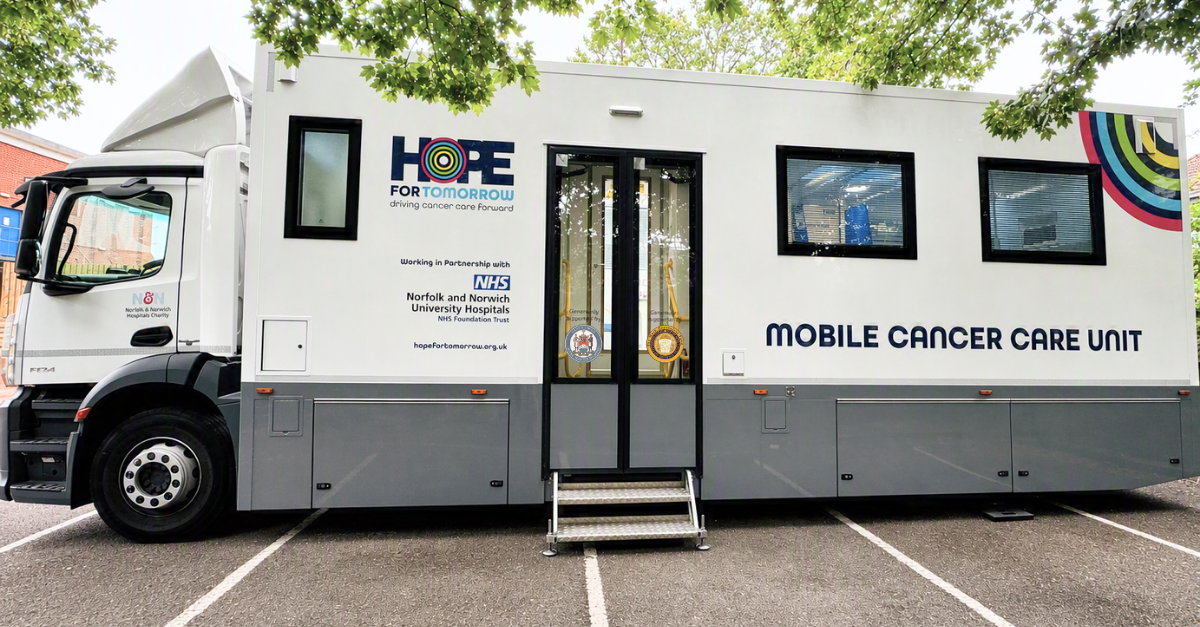
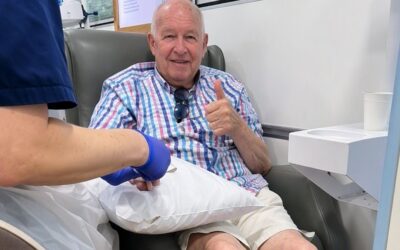
I now have immunotherapy on the mobile unit every three weeks, and it is working very well.
I’m usually there for an hour and a half, and it’s such a happy and friendly place. It’s so easy and convenient for me. Sprowston is a 20-minute drive from where I live in Great Yarmouth. It’s a straight, easy road, and I just pull up alongside the back of the bus, which parks in the sports and social centre
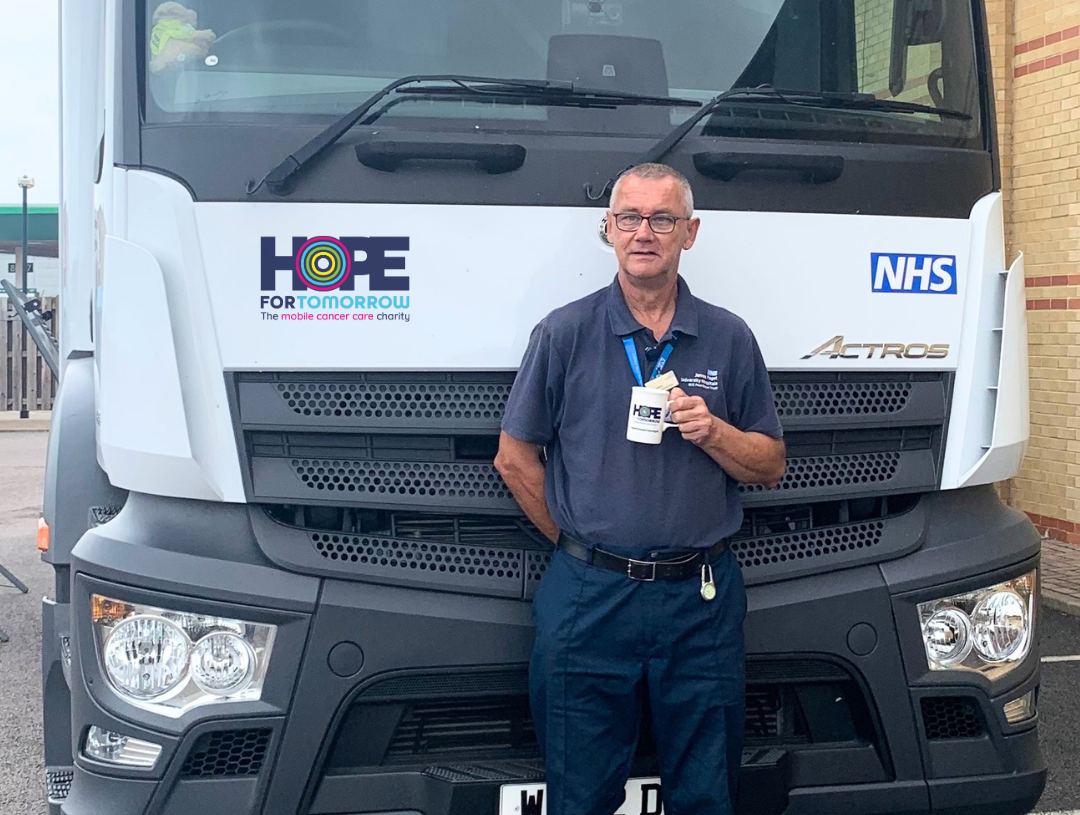
Mark, the driver, recognises the cars and comes out to help people like me who are not too steady on their feet and helps us onto the unit.
He’s just brilliant; he does a lot of running around, making sure everyone has a cuppa if they want one. It’s a very easy atmosphere there, and I have got to know the nurses quite well. It makes a big difference to the whole experience. It allows people to get on with their normal, everyday lives with the least travelling and waiting around, which can be physically exhausting.
I started off having radiotherapy at the Norfolk & Norwich University Hospital which is just outside Norwich and quite a trek from my home near Great Yarmouth.
The hospital has quite limited parking, and although I am registered disabled and have a blue badge, I would always get there early, as often I would have to wait for one of the disabled spaces to become available,
I suffer from sciatica, so I struggle to walk, so it’s important that I can park as close as possible to where I need to be.
I found it very stressful worrying about being on time and getting a good parking spot. There always seemed to be a lot of messing around.
The simple fact is the hospital is overwhelmed, so for the mobile unit to be able to take some of that pressure off and free up space for patients who really have to attend there is just brilliant.
The hospital is often dealing with 80 people a day, and when it is hectic, the whole day would get written off. I was never able to make any other arrangements or do anything else because I never knew how long anything was going to take.
If I had to describe the mobile unit in one word, it would be ‘smashing.’
And if I ever win the lottery, there will be a big donation coming from me for Hope for Tomorrow because the service it provides is second to none.”
“The first time I attended the mobile unit I couldn’t get over how wonderful it was. But it was only after a couple of visits that I found out it was run and funded by a charity and not the NHS.
It’s just a lovely place to go to. It’s so calm and relaxed without any hassle. The whole process from start to finish is very easy and as good as it can be in the circumstances.
There’s no doubt that being able to have my treatment there has made my life so much easier.
I have suffered from skin cancer for many years. I used to sail a lot and, in my day, we didn’t really bother with sunscreen and hats.
Initially, the cancer would be cut out as and when necessary, but unfortunately during COVID, I wasn’t having any regular checks, and the cancer started spreading on my face.
At one point I had a lump the size of half an egg which was taken off, and I had a skin transplant, but another lump appeared on the other side. It was a real mess, and it was a while before that was removed.
I started off having radiotherapy at the Norfolk & Norwich University Hospital which is just outside Norwich and quite a trek from my home near Great Yarmouth.
The hospital has quite limited parking, and although I am registered disabled and have a blue badge, I would always get there early, as often I would have to wait for one of the disabled spaces to become available,
I suffer from sciatica, so I struggle to walk, so it’s important that I can park as close as possible to where I need to be.
I found it very stressful worrying about being on time and getting a good parking spot. There always seemed to be a lot of messing around.
The simple fact is the hospital is overwhelmed, so for the mobile unit to be able to take some of that pressure off and free up space for patients who really have to attend there is just brilliant.
I now have immunotherapy on the mobile unit every three weeks, and it is working very well.
I’m usually there for an hour and a half, and it’s such a happy and friendly place. It’s so easy and convenient for me. Sprowston is a 20-minute drive from where I live in Great Yarmouth. It’s a straight, easy road, and I just pull up alongside the back of the bus, which parks in the sports and social centre
Mark, the driver, recognises the cars and comes out to help people like me who are not too steady on their feet and helps us onto the unit.
He’s just brilliant; he does a lot of running around, making sure everyone has a cuppa if they want one. It’s a very easy atmosphere there, and I have got to know the nurses quite well. It makes a big difference to the whole experience. It allows people to get on with their normal, everyday lives with the least travelling and waiting around, which can be physically exhausting.
The hospital is often dealing with 80 people a day, and when it is hectic, the whole day would get written off. I was never able to make any other arrangements or do anything else because I never knew how long anything was going to take.
If I had to describe the mobile unit in one word, it would be ‘smashing.’
And if I ever win the lottery, there will be a big donation coming from me for Hope for Tomorrow because the service it provides is second to none.”