Anne-Marie Brooks is a deputy sister with the United Lincolnshire Hospitals Trust. She grew up naturally wanting to care for people, a passion that was reinforced during years of watching her mum working as a nurse. By the age of 16, she was employed as a housekeeping assistant at her local hospital and is now part of the team on ‘Elaine’, the Hope for Tomorrow mobile cancer care unit serving Louth, Spalding and Skegness. She lives with her husband and 8-year-old son, which she says involves lots of football and swimming! When she got the chance to work on the mobile unit, she says she was immediately struck by how amazing it was to be able to offer treatment to patients so close to their own homes.
I absolutely love my shifts on the mobile unit. I really enjoy caring for and helping people. I feel the setting gives you a little extra time to get to know your patients, and you can give more personalised care. There is more continuity of care and a real chance to get to know the patients, which I think is so important. I really enjoy this aspect of it.
When I first started on the mobile unit, I remember thinking how amazing it was that we could give patients their treatment so close to home and how much we were able to do on the unit. It’s also warm and comfortable. People are genuinely happy to attend the mobile cancer care unit, and we get such lovely feedback. They really appreciate it being more personal. Not only is it closer to home, but appointment times are more easily kept as there are limited chairs on the mobile unit. This makes things flow more easily most of the time. Sometimes, the fact that it’s smaller than a normal clinical unit can have its challenges, but we always manage.
I think one of the main benefits is less travel time, and that alone gives patients more of their personal time back, which is really important for people with limited time. To be given time to do more of the things they enjoy outside their treatment. That’s important. It also prevents people from having to use transport services and relieves the pressure on the main hospital units. It is something I feel is so important and has such an impact on people’s lives.
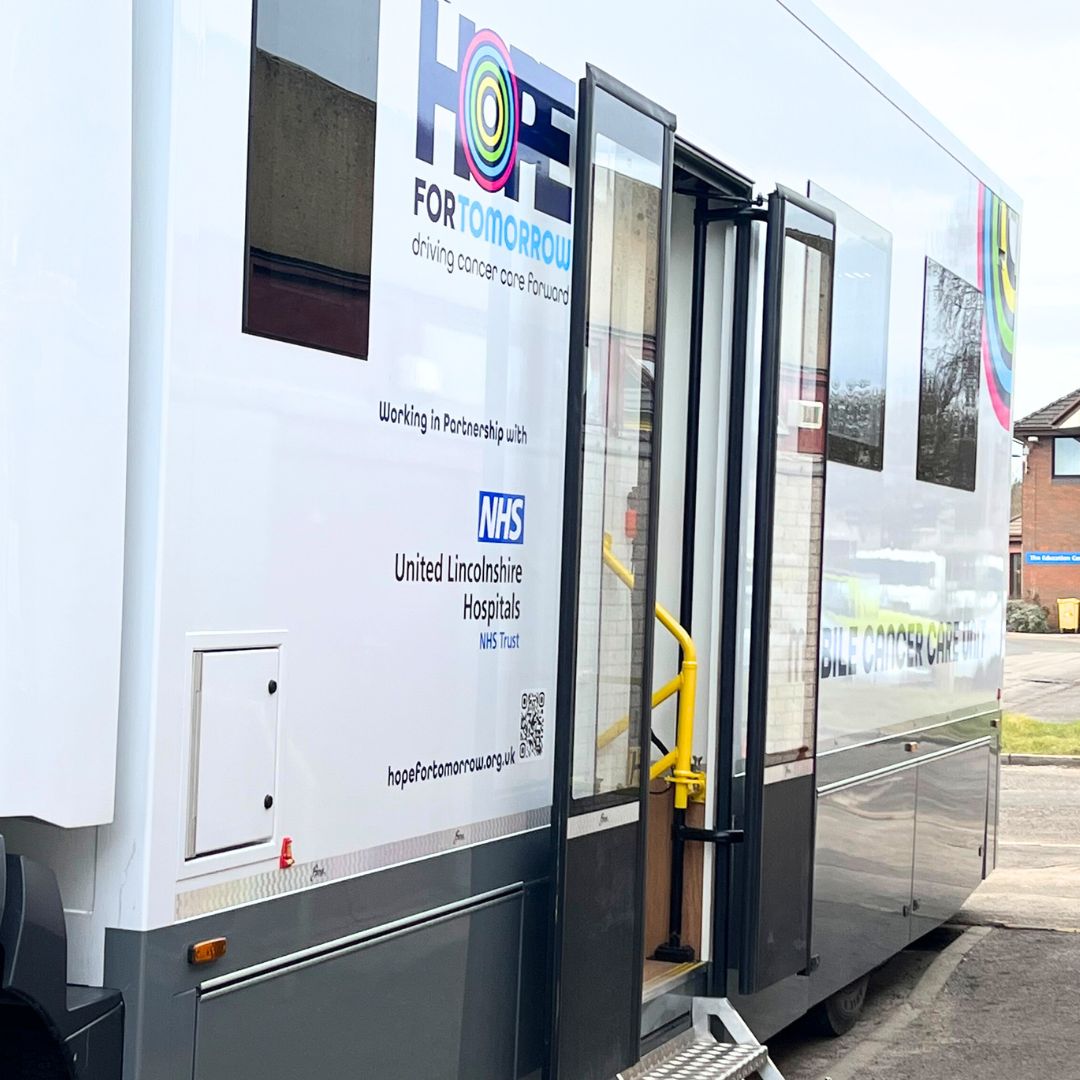
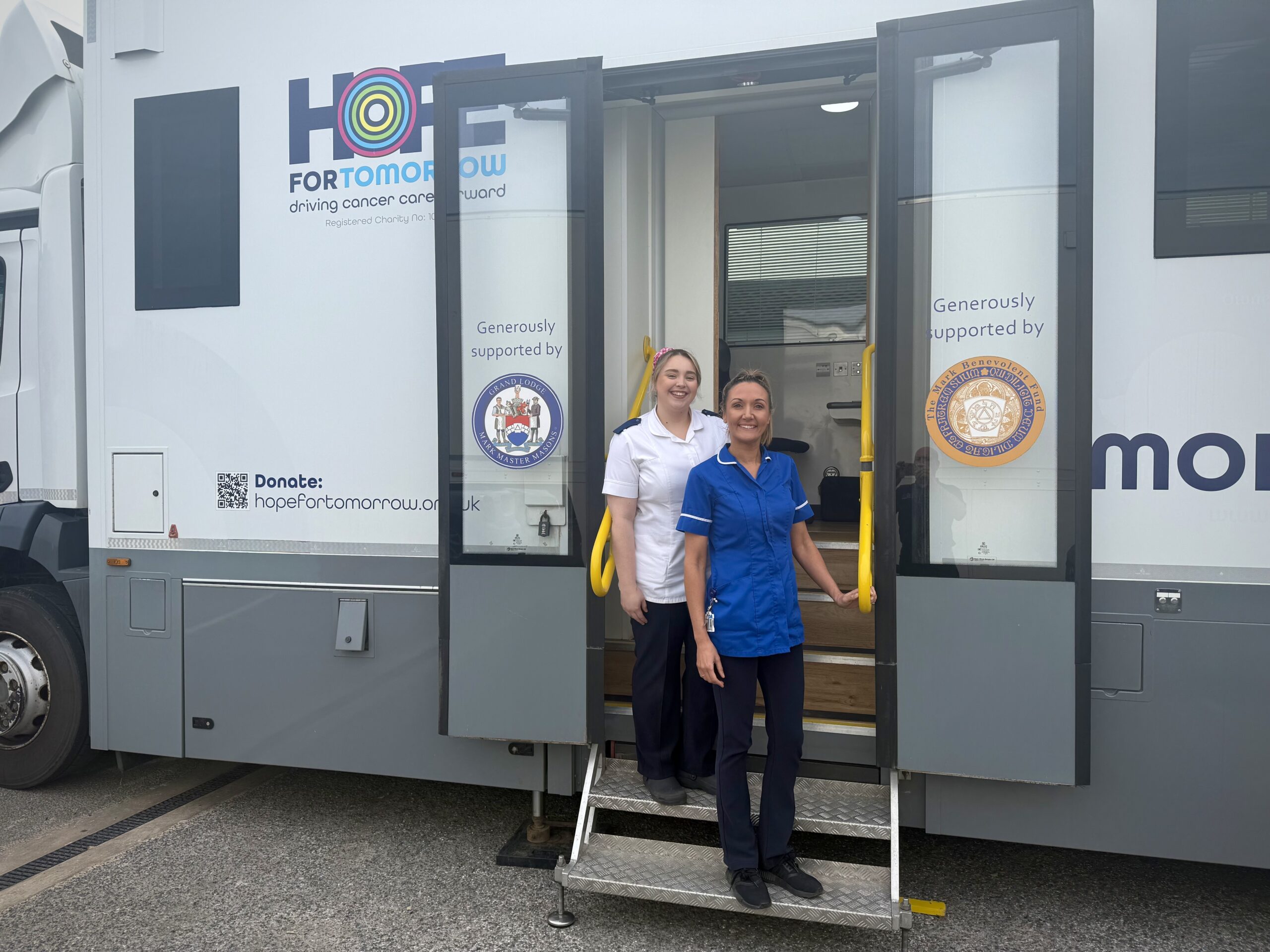
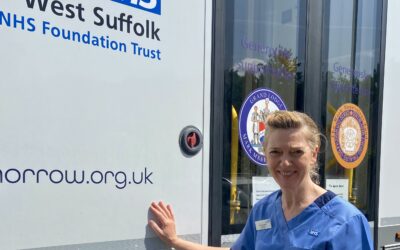
Anne-Marie (right) and a colleague outside ‘Elaine’, the Hope for Tomorrow mobile cancer care unit on which they work
It has definitely made me more aware of how important cancer care out in the community is and how much of a positive impact this has on patients’ lives. Some say they would feel lost without the service, and that it makes their lives so much better having it available to them.
I think patients are also generally more positive when they know their nurse, and it’s also the same senior staff that regularly cover the unit, so that helps with continuity. They also like that they are seen more quickly.
A typical day for us starts at the hospital where we make sure all patients’ bloods are ok, and they are fit for treatment. We then collect the treatment and drive to the location. Patients then have their appointment times, and we do lots of treatments and PICC line care. Tea and coffee are offered to patients, and they are able to sit in comfortable chairs whilst having treatment. They get a snack and have a chat with the nurses. Once the day is finished, we take all the bloods back to the hospital, and prep for the next shift on here.
It really is a team effort from everyone, from the staff to the fundraisers, who we really appreciate.
Prior to joining here, I qualified and worked on a medical admissions unit for two years. This was followed by several years working in the community, looking after patients in their own homes. I chose oncology as I found it so interesting. I feel it is a privilege to work in this field.
Anne-Marie Brooks is a deputy sister with the United Lincolnshire Hospitals Trust. She grew up naturally wanting to care for people, a passion that was reinforced during years of watching her mum working as a nurse. By the age of 16, she was employed as a housekeeping assistant at her local hospital and is now part of the team on ‘Elaine’, the Hope for Tomorrow mobile cancer care unit serving Louth, Spalding and Skegness. She lives with her husband and 8-year-old son, which she says involves lots of football and swimming! When she got the chance to work on the mobile unit, she says she was immediately struck by how amazing it was to be able to offer treatment to patients so close to their own homes.
Anne-Marie (right) and a colleague outside ‘Elaine’, the Hope for Tomorrow mobile cancer care unit on which they work
I absolutely love my shifts on the mobile unit. I really enjoy caring for and helping people. I feel the setting gives you a little extra time to get to know your patients, and you can give more personalised care. There is more continuity of care and a real chance to get to know the patients, which I think is so important. I really enjoy this aspect of it.
When I first started on the mobile unit, I remember thinking how amazing it was that we could give patients their treatment so close to home and how much we were able to do on the unit. It’s also warm and comfortable. People are genuinely happy to attend the mobile cancer care unit, and we get such lovely feedback. They really appreciate it being more personal. Not only is it closer to home, but appointment times are more easily kept as there are limited chairs on the mobile unit. This makes things flow more easily most of the time. Sometimes, the fact that it’s smaller than a normal clinical unit can have its challenges, but we always manage.
I think one of the main benefits is less travel time, and that alone gives patients more of their personal time back, which is really important for people with limited time. To be given time to do more of the things they enjoy outside their treatment. That’s important. It also prevents people from having to use transport services and relieves the pressure on the main hospital units. It is something I feel is so important and has such an impact on people’s lives.
It has definitely made me more aware of how important cancer care out in the community is and how much of a positive impact this has on patients’ lives. Some say they would feel lost without the service, and that it makes their lives so much better having it available to them.
I think patients are also generally more positive when they know their nurse, and it’s also the same senior staff that regularly cover the unit, so that helps with continuity. They also like that they are seen more quickly.
A typical day for us starts at the hospital where we make sure all patients’ bloods are ok, and they are fit for treatment. We then collect the treatment and drive to the location. Patients then have their appointment times, and we do lots of treatments and PICC line care. Tea and coffee are offered to patients, and they are able to sit in comfortable chairs whilst having treatment. They get a snack and have a chat with the nurses. Once the day is finished, we take all the bloods back to the hospital, and prep for the next shift on here.
It really is a team effort from everyone, from the staff to the fundraisers, who we really appreciate.
Prior to joining here, I qualified and worked on a medical admissions unit for two years. This was followed by several years working in the community, looking after patients in their own homes. I chose oncology as I found it so interesting. I feel it is a privilege to work in this field.