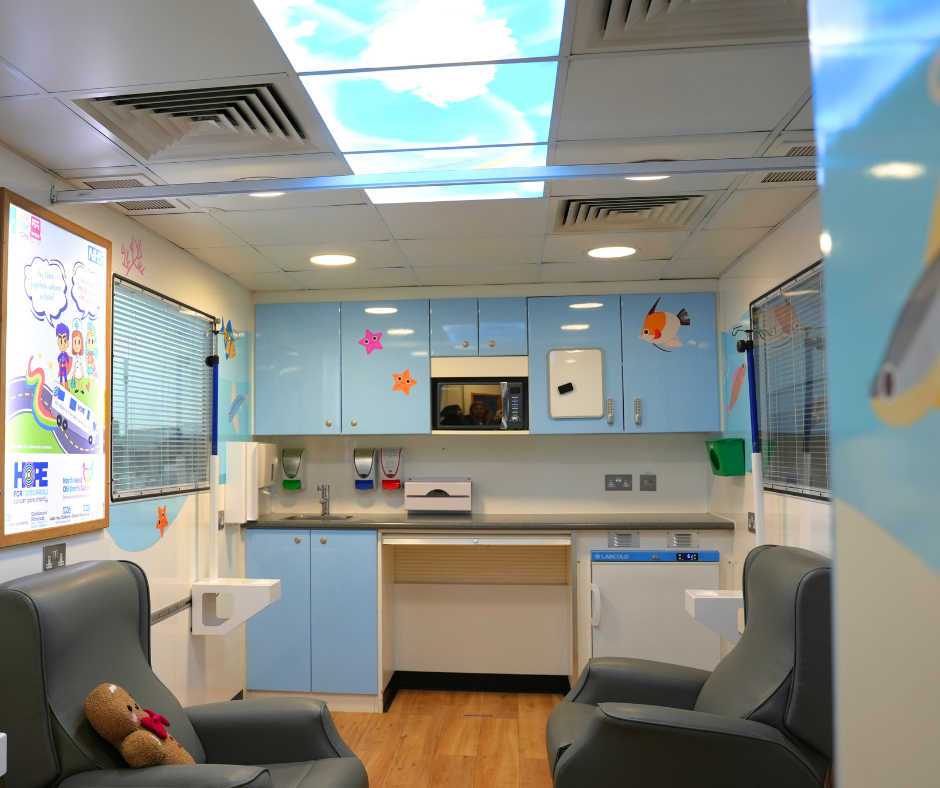
Hope for Tomorrow is proud to announce its role in a landmark pilot project that, for the first time in the UK, will see children and young people with cancer receive treatment on a mobile cancer care unit, bringing care directly into their communities and closer to home.
Hope for Tomorrow has long championed the principle that cancer care should fit around patients’ lives — not the other way around. For two decades, our fleet of mobile cancer care units has been transforming the experience of adult cancer patients across the country. Today, we are excited to share that one of our mobile cancer care units is now playing a pivotal role in an innovative new pilot project that extends this model to children and young people with cancer for the very first time.
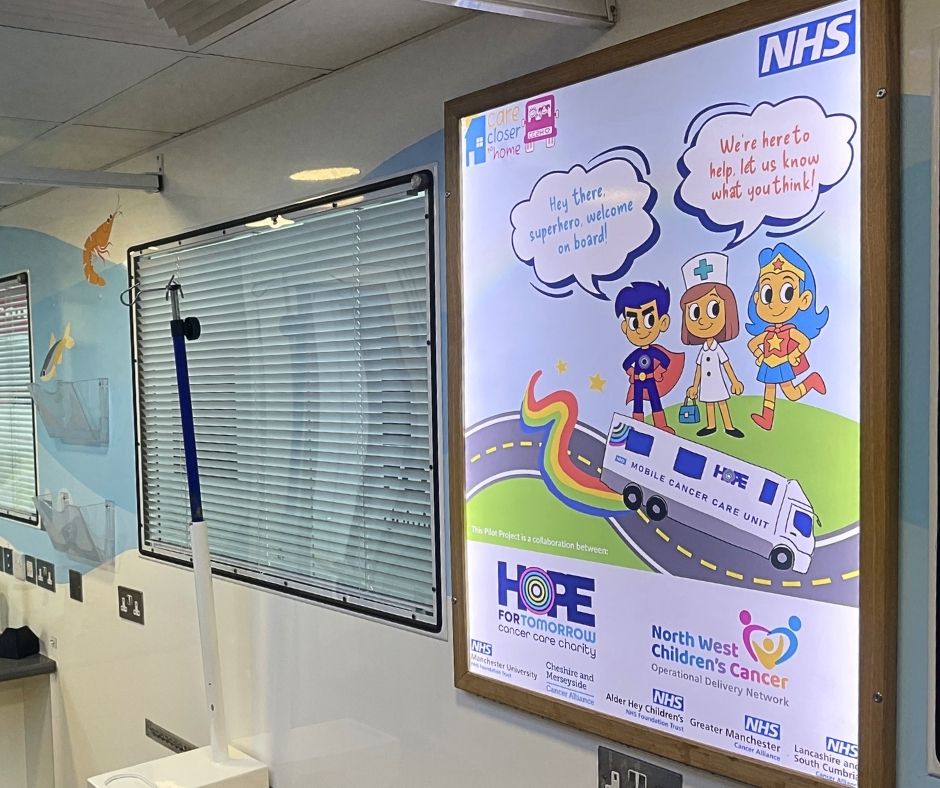
The Care Closer to Home pilot is a proof-of-concept project led by the North West Children’s Cancer Operational Delivery Network (NWCCODN), delivered in collaboration with Hope for Tomorrow, and funded by the three Cancer Alliances of the North West: Greater Manchester Cancer Alliance, Cheshire and Merseyside Cancer Alliance, and Lancashire & South Cumbria Cancer Alliance. The pilot is currently funded to run until July 2026.
Unlike adult cancer patients, children and young people must travel to a very small number of specialist centres available in the country, meaning families often face journeys of significant distance — sometimes more than 100 miles each way — for treatments that can take only minutes to administer. Recent data from the North West region paints a stark picture of the strain this places on families: an average monthly travel cost of £245 and an average one-way journey of 54 miles.
Professor Bernadette Brennan, Paediatric Oncologist and Lead Cancer Clinician at Royal Manchester Children’s Hospital, said:
“When you look at our RMCH oncology outpatients and daycase unit, you often see patients who have travelled more than 100 miles for a simple bolus chemotherapy treatment that takes only minutes. The new mobile unit will bring this care closer to home, reducing travel, cutting costs and significantly improving patients’ quality of life”.
Davina Hartley, Network Manager for the NWCCODN said:
“The NWCCODN are proud to lead this innovative Care Closer to Home project, which aims to reduce the travel burden for children with cancer and their families, improve equity of access, and address long waits at Paediatric Treatment Centre Daycase Units, issues identified by children themselves as critical to improving their care experience.”
Hope for Tomorrow is excited to be part of this innovative pilot project. If successful, it opens the door to a more permanent solution: a purpose-built mobile cancer care unit designed specifically for children and young people, which will require significant funding from our generous supporters to establish. We look forward to learning the results following the evaluation stage.
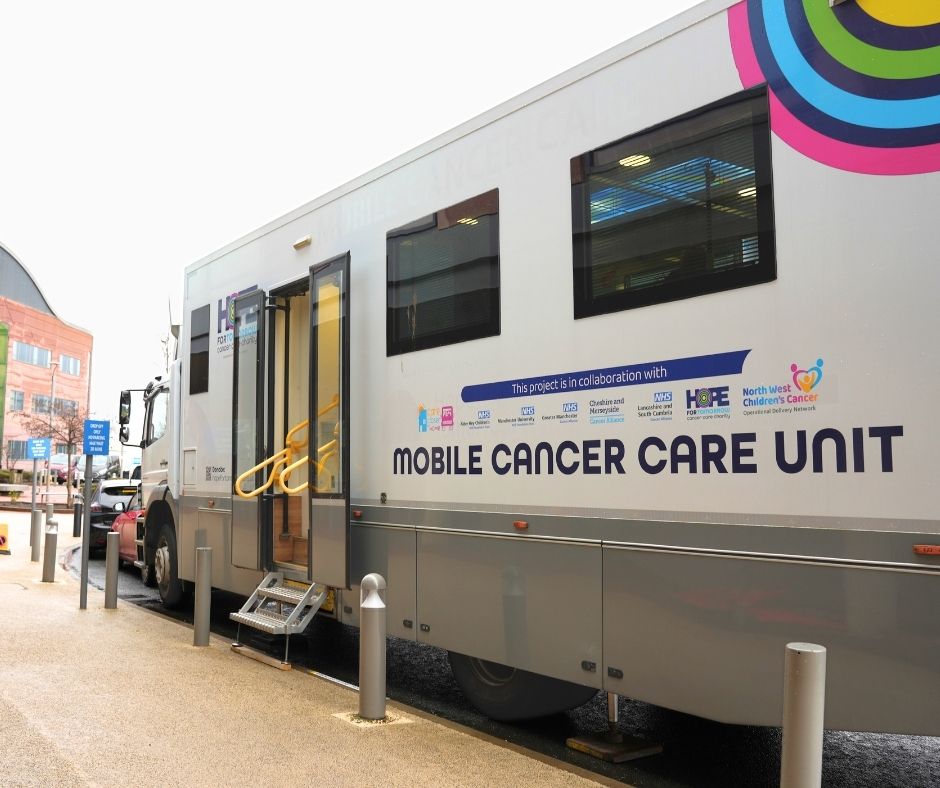
At Hope for Tomorrow, we are providing the mobile cancer care unit that makes this pilot possible — creating the environment in which this entirely new model of children’s cancer care delivery can be tested. This is new territory: previously, children have not been treated for cancer in a mobile setting in the UK, and we are honoured to bring our experience to enable this extraordinary step forward.
Tina Seymour, Chief Executive, said,
“Hope for Tomorrow has been bringing cancer care closer to patients in their communities for two decades. Our mobile cancer care units help patients fit cancer care into their lives rather than having their lives dominated by it. Now we’re excited to be a part of this project and to explore the impact that this could have for children, young people and their families.”
Around 600 children are treated for cancer in the North West region each year, and this grows to 1,645 children aged 0 to 14 diagnosed with cancer annually in the UK.*
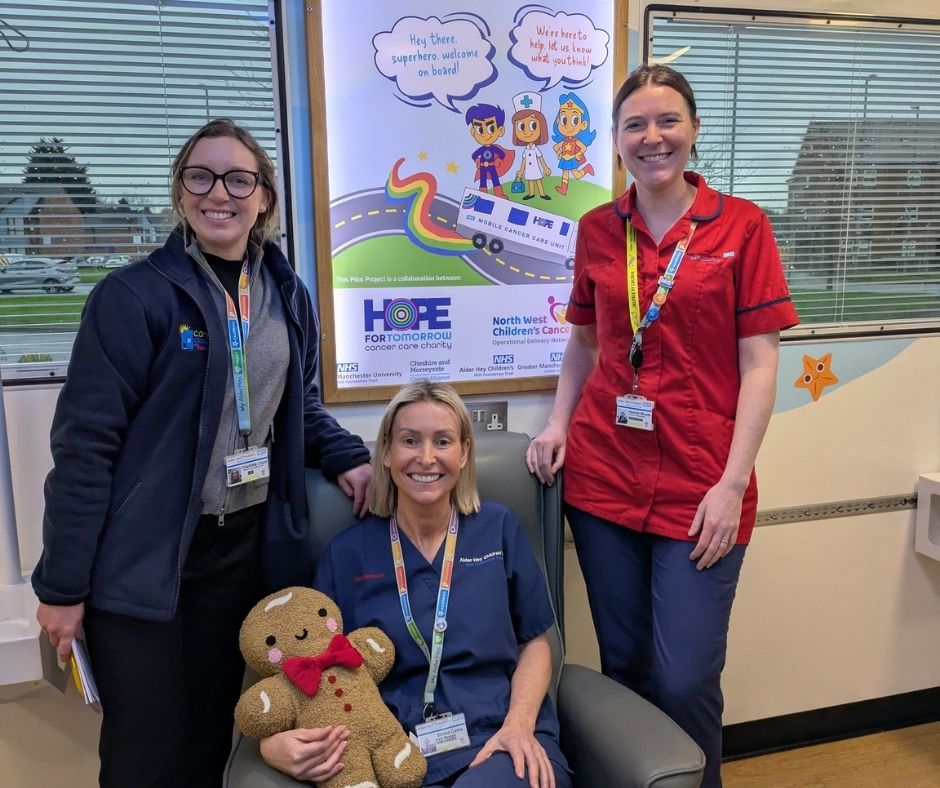
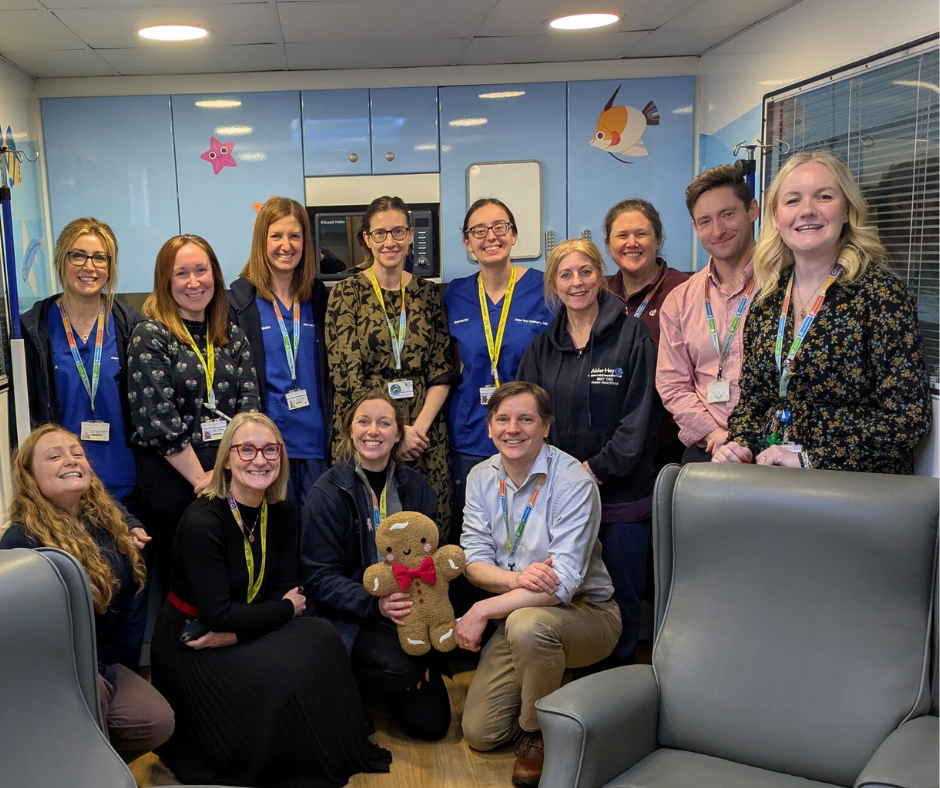
Nurses from the Royal Manchester Children’s Hospital (RMCH) and Alder Hey Children’s NHS Foundation Trust will deliver selected chemotherapy and supportive treatments — typically administered in a day case clinic — on the Hope for Tomorrow mobile cancer care unit, which will be parked in convenient community locations across the North West, including sites such as supermarkets and garden centres, assessed as safe and appropriate.
This pilot aligns powerfully with the NHS 10 Year Plan and the recently released National Cancer Plan — it speaks directly to their specific ambitions for children and young people. The National Cancer Plan commits to embedding the needs of children and young people into the design of neighbourhood health services and to improving their experiences of cancer care. Hope for Tomorrow’s mobile units offer a way to make this development – taking high-quality cancer care out of the hospital environment and into the community, where it can be delivered on patients’ terms. This pilot is a vital first step in making that aspiration tangible for children and young people.
*Data from Young Lives Vs Cancer and Children with Cancer UK, respectively
Hope for Tomorrow is proud to announce its role in a landmark pilot project that, for the first time in the UK, will see children and young people with cancer receive treatment on a mobile cancer care unit, bringing care directly into their communities and closer to home.
Hope for Tomorrow has long championed the principle that cancer care should fit around patients’ lives — not the other way around. For two decades, our fleet of mobile cancer care units has been transforming the experience of adult cancer patients across the country. Today, we are excited to share that one of our mobile cancer care units is now playing a pivotal role in an innovative new pilot project that extends this model to children and young people with cancer for the very first time.
The Care Closer to Home pilot is a proof-of-concept project led by the North West Children’s Cancer Operational Delivery Network (NWCCODN), delivered in collaboration with Hope for Tomorrow, and funded by the three Cancer Alliances of the North West: Greater Manchester Cancer Alliance, Cheshire and Merseyside Cancer Alliance, and Lancashire & South Cumbria Cancer Alliance. The pilot is currently funded to run until July 2026.
At Hope for Tomorrow, we are providing the mobile cancer care unit that makes this pilot possible — creating the environment in which this entirely new model of children’s cancer care delivery can be tested. This is new territory: previously, children have not been treated for cancer in a mobile setting in the UK, and we are honoured to bring our experience to enable this extraordinary step forward.
Tina Seymour, Chief Executive, said,
“Hope for Tomorrow has been bringing cancer care closer to patients in their communities for two decades. Our mobile cancer care units help patients fit cancer care into their lives rather than having their lives dominated by it. Now we’re excited to be a part of this project and to explore the impact that this could have for children, young people and their families.”
Around 600 children are treated for cancer in the North West region each year, and this grows to 1,645 children aged 0 to 14 diagnosed with cancer annually in the UK.*
Unlike adult cancer patients, children and young people must travel to a very small number of specialist centres available in the country, meaning families often face journeys of significant distance — sometimes more than 100 miles each way — for treatments that can take only minutes to administer. Recent data from the North West region paints a stark picture of the strain this places on families: an average monthly travel cost of £245 and an average one-way journey of 54 miles.
Professor Bernadette Brennan, Paediatric Oncologist and Lead Cancer Clinician at Royal Manchester Children’s Hospital, said:
“When you look at our RMCH oncology outpatients and daycase unit, you often see patients who have travelled more than 100 miles for a simple bolus chemotherapy treatment that takes only minutes. The new mobile unit will bring this care closer to home, reducing travel, cutting costs and significantly improving patients’ quality of life”.
Nurses from the Royal Manchester Children’s Hospital (RMCH) and Alder Hey Children’s NHS Foundation Trust will deliver selected chemotherapy and supportive treatments — typically administered in a day case clinic — on the Hope for Tomorrow mobile cancer care unit, which will be parked in convenient community locations across the North West, including sites such as supermarkets and garden centres, assessed as safe and appropriate.
This pilot aligns powerfully with the NHS 10 Year Plan and the recently released National Cancer Plan — it speaks directly to their specific ambitions for children and young people. The National Cancer Plan commits to embedding the needs of children and young people into the design of neighbourhood health services and to improving their experiences of cancer care. Hope for Tomorrow’s mobile units offer a way to make this development – taking high-quality cancer care out of the hospital environment and into the community, where it can be delivered on patients’ terms. This pilot is a vital first step in making that aspiration tangible for children and young people.
Davina Hartley, Network Manager for the NWCCODN said:
“The NWCCODN are proud to lead this innovative Care Closer to Home project, which aims to reduce the travel burden for children with cancer and their families, improve equity of access, and address long waits at Paediatric Treatment Centre Daycase Units, issues identified by children themselves as critical to improving their care experience.”
Hope for Tomorrow is excited to be part of this innovative pilot project. If successful, it opens the door to a more permanent solution: a purpose-built mobile cancer care unit designed specifically for children and young people, which will require significant funding from our generous supporters to establish. We look forward to learning the results following the evaluation stage.
*Data from Young Lives Vs Cancer and Children with Cancer UK, respectively