The greatest gift for anyone with a cancer diagnosis is to give them precious time with their loved ones
That’s what Dr Luke Kuttschreuter says, who, after years of working in oncology, discovered he wasn’t invincible to the disease himself.
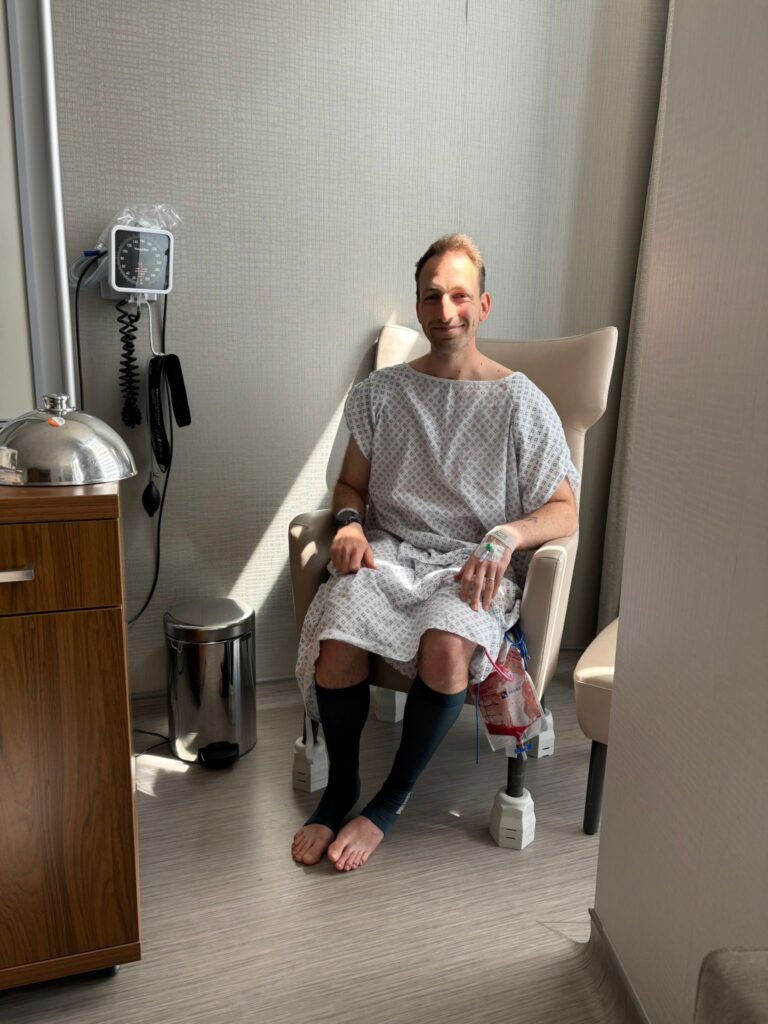
Last year, he was dealt the blow that he had kidney cancer. He was suddenly no longer the doctor, but the patient with a cancer journey of his own.
Endless hours of waiting at hospital appointments, when all he really wanted was to be with his family, especially his baby son, gave him an insight into what his patients were going through.
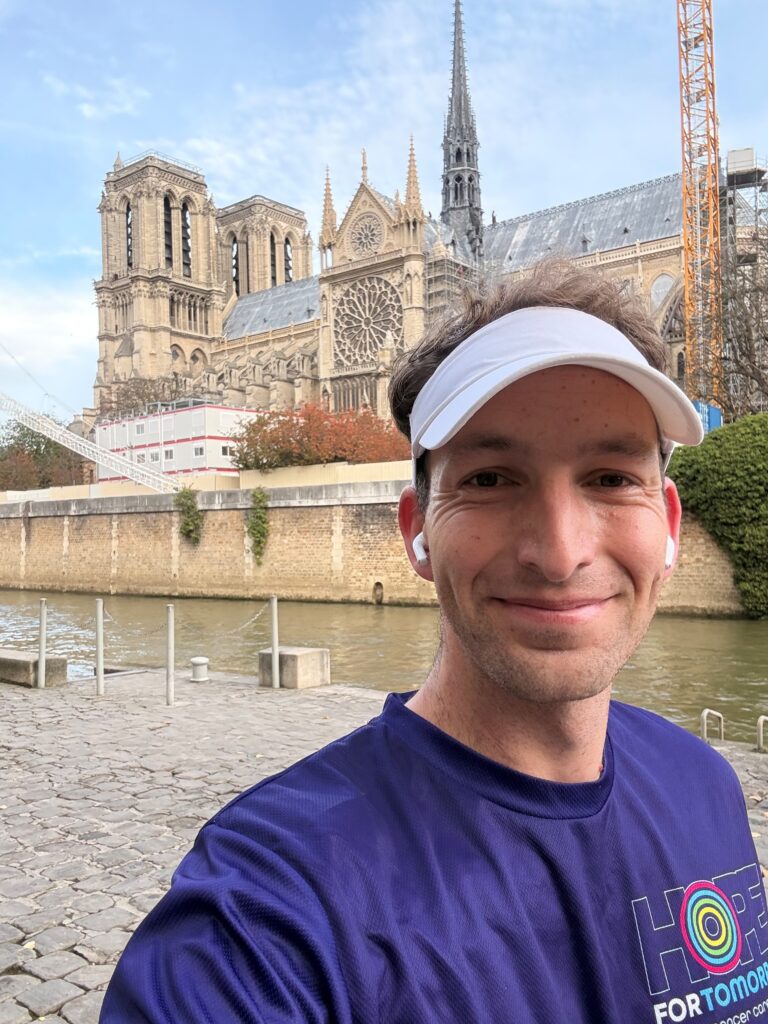
It is that experience that will spur him on to cross the finish line at this year’s Paris Marathon, with all the money he raises going to support Hope for Tomorrow’s mobile cancer care units.
“While facing my cancer, the thing that stuck with me more than anything was the awareness of time slipping away, either due to travelling or waiting to be seen. Sometimes my hospital appointments might take 3 hours, during which I was acutely aware that I was not spending that time with the people that mattered to me,” says Luke.
Because his cancer was picked up early, Luke underwent surgery without the need for chemotherapy or radiotherapy. So it was only after his operation that he became aware of the existence of our mobile units.
“Being diagnosed with cancer was the scariest experience of my life, and it was while staring my treatment in the face that I decided I would bounce back with a vengeance, so I entered (maybe foolishly) the Paris Marathon,” says Luke.
“I had started running a bit before my operation to get my heart and lungs ready for the strain, and I knew I wanted to continue afterwards,” he says.
“That’s when I decided I wanted to run towards something, to focus on a goal rather than run away from the reality of what was about to happen. The plan was always to support a cancer charity, but I needed to be specific in my choice.
“I knew I wanted to make a bigger difference to a smaller charity, and that’s when I came across the mobile units. I am now passionate about supporting them because bringing cancer care closer to home genuinely gives patients that very precious commodity of time.
“I have absolutely no doubt that the mobile units categorically make a real difference to people going through a cancer diagnosis.
“They are convenient, efficient and quick, and that frees up invaluable time to spend with their loved ones. I was blown away by the service they offer and could clearly see what a difference it would have made to me if I had needed further treatment.”
Working in oncology, and also being a patient, I’ve had it reinforced to me that family and health are the greatest gifts you have. Time is what everyone needs and deserves.
“When you are going through cancer, every single minute counts. Sometimes it’s a huge effort just to get out of bed, never mind drive miles to hospital, to then sit around never knowing how long the whole thing is going to take.
“When I was having it tough, it was the time spent with my family and friends that got me through.
“Cancer treatment causes absolute sheer fatigue; it’s like someone has taken out your batteries. I wasn’t able to do much at all. I couldn’t work; I couldn’t even pick up my little boy. My wife had to do all the heavy lifting for a while.”
Luke currently works for a biotech company designing clinical trials for cancers.
He says: “My own diagnosis meant I got a first-hand look at what a patient in one of my trials must face. Working so closely with cancer in my job, I fell into the trap of thinking I was unlikely to get sick like my patients. It was never going to happen to me. Besides, I was only 35.
People assume as a doctor you know what to do and not to do to avoid the disease, but cancer doesn’t discriminate
Luke’s training for the marathon is going well, and he has already surpassed his fundraising target of £1,000.
“The figure is currently hovering just under £2,000 but I will be over the moon if I can raise £3,000,” he says.
“And I am determined to make it happen.”
“Giving people back their time is priceless while still allowing them to get the life-saving treatment they need.
“I have indescribable thankfulness for the time I was able to spend with my family when going through such a horrible experience.
“But not everyone has this good fortune. Many will spend their lives in the impersonable isolation of a ward or clinic unable to be with their loved ones at a time when they need it more than ever.
“The mobile units have changed the lives of thousands of people suffering from cancer and beyond. Not only do they give back time to cancer patients, but they create space in hospitals for other people with more complex needs.
“They play a vital role in reducing the severe backlog that is the single greatest challenge facing cancer care in our healthcare system today.
“I chose to run the marathon for Hope for Tomorrow’s mobile units because I wanted to support a cause that makes a very practical, tangible everyday difference to people who are living with cancer right now.”
The greatest gift for anyone with a cancer diagnosis is to give them precious time with their loved ones
That’s what Dr Luke Kuttschreuter says, who, after years of working in oncology, discovered he wasn’t invincible to the disease himself.
Last year, he was dealt the blow that he had kidney cancer. He was suddenly no longer the doctor, but the patient with a cancer journey of his own.
Endless hours of waiting at hospital appointments, when all he really wanted was to be with his family, especially his baby son, gave him an insight into what his patients were going through.
And it is that experience that will spur him on to cross the finish line at this year’s Paris Marathon, with all the money he raises going to support Hope for Tomorrow’s mobile cancer care units.
“While facing my cancer, the thing that stuck with me more than anything was the awareness of time slipping away, either due to travelling or waiting to be seen. Sometimes my hospital appointments might take three hours, during which I was acutely aware that I was not spending that time with the people that mattered to me,” says Luke.
Because his cancer was picked up early, Luke underwent surgery without the need for chemotherapy or radiotherapy. So it was only after his operation that he became aware of the existence of the charity’s mobile units.
“Being diagnosed with cancer was the scariest experience of my life, and it was while staring my treatment in the face that I decided I would bounce back with a vengeance, so I entered (maybe foolishly) the Paris Marathon,” says Luke.
“I had started running a bit before my operation to get my heart and lungs ready for the strain, and I knew I wanted to continue afterwards,” he says.
“That’s when I decided I wanted to run towards something, to focus on a goal rather than run away from the reality of what was about to happen. The plan was always to support a cancer charity, but I needed to be specific in my choice.
“I knew I wanted to make a bigger difference to a smaller charity, and that’s when I came across the mobile units. I am now passionate about supporting them because bringing cancer care closer to home genuinely gives patients that very precious commodity of time.
“I have absolutely no doubt that the mobile units categorically make a real difference to people going through a cancer diagnosis.
“They are convenient, efficient and quick, and that frees up invaluable time to spend with their loved ones. I was blown away by the service they offer and could clearly see what a difference it would have made to me if I had needed further treatment.”
Working in oncology, and also being a patient, I’ve had it reinforced to me that family and health are the greatest gifts you have. Time is what everyone needs and deserves.
“When you are going through cancer, every single minute counts. Sometimes it’s a huge effort just to get out of bed, never mind drive miles to hospital, to then sit around never knowing how long the whole thing is going to take.
“When I was having it tough, it was the time spent with my family and friends that got me through.
“Cancer treatment causes absolute sheer fatigue; it’s like someone has taken out your batteries. I wasn’t able to do much at all. I couldn’t work; I couldn’t even pick up my little boy. My wife had to do all the heavy lifting for a while.”
Luke currently works for a biotech company designing clinical trials for cancers.
He says: “My own diagnosis meant I got a first-hand look at what a patient in one of my trials must face. Working so closely with cancer in my job, I fell into the trap of thinking I was unlikely to get sick like my patients. It was never going to happen to me. Besides, I was only 35.
People assume as a doctor you know what to do and not to do to avoid the disease, but cancer doesn’t discriminate
Luke’s training for the marathon is going well, and he has already surpassed his fundraising target of £1,000.
“The figure is currently hovering just under £2,000 but I will be over the moon if I can raise £3,000,” he says.
“And I am determined to make it happen.”
“Giving people back their time is priceless while still allowing them to get the life-saving treatment they need.
“I have indescribable thankfulness for the time I was able to spend with my family when going through such a horrible experience.
“But not everyone has this good fortune. Many will spend their lives in the impersonable isolation of a ward or clinic unable to be with their loved ones at a time when they need it more than ever.
“The mobile units have changed the lives of thousands of people suffering from cancer and beyond. Not only do they give back time to cancer patients, but they create space in hospitals for other people with more complex needs.
“They play a vital role in reducing the severe backlog that is the single greatest challenge facing cancer care in our healthcare system today.
“I chose to run the marathon for Hope for Tomorrow’s mobile units because I wanted to support a cause that makes a very practical, tangible everyday difference to people who are living with cancer right now.”
